
Author Archives: Jenny Weatherall

About Jenny Weatherall

Jenny Weatherall is the co-owner and CEO of Eminent SEO, a design and marketing agency founded in 2009. She has worked in the industry since 2005, when she fell in love with digital marketing… and her now husband and partner, Chris. Together they have 6 children and 3 granddaughters. Jenny has a passion for learning and sharing what she learns. She has researched, written and published hundreds of articles on a wide variety of topics, including: SEO, design, marketing, ethics, business management, sustainability, inclusion, behavioral health, wellness and work-life balance.

Painting on Easel

Art in Recovery: Laura Mechling Revisits Roots, Gets Personal

Artist: Laura Mechling and her Mom

Artist: Laura Mechling

Instagram: @lalala____scribbles

Medium/Style: Pen & Ink, Simple Lines, Black on White, mixed media and collage work

Not everyone is an artist, or so it is that many people believe. True art, not only lies in the beholder, but is also a direct manifestation of each person’s authentic self. What we, as humans, can keep emotionally hidden will often cry out through detailed etchings and the brush strokes of time. Our painful truth and resolve come to life through art in recovery.

Why Laura Mechling

This is a featured interview on artist Laura Mechling. Although she is not in recovery her works are inspired by those close to her, friends and family who fight the disease of addiction every day. Mechling is a voice for many aspiring artists yet to be discovered, until they find themselves doing art in rehab. One of the many benefits of artistic expression during addiction treatment is the reconnection with the subconscious self.

Laura - Art in Recovery

Pushing Beyond Fear during Art Therapy

I would tell someone not to be intimidated to try something new,” Mechling mused during our interview. “I think people are scared of the unknown because we never know the outcome of taking risks. Testing out a new form of expression might allow room for growth and a sense of awareness of themselves and others,” she continued.

She also draws a correlation between creating art in rehab and the recovery process as a whole. Mechling explained, “Many people would rather stay in their comfort zone of living in old habits, however, allowing themselves the time to work through the process, there comes the opportunity for awareness on the other side.”

Greater awareness is one of the many aspects that can be both alarming and restorative to a person in recovery. In fact, it’s one of the essential life skills that support healthier decision-making during sober living.

Laura - Art Therapy

Inspiring Imagery Creates Healing in Others

Using visualization is a key component of the practice of mindfulness, a valued resource for those seeking ongoing and consistent refuge from the negativity that permeates the world. Mechling delivers visualization of thought in the places she’s been, the people she’s spoken with, and the moments that defy logic. To her, there’s beauty in them all.

Her mind’s eye is shared through articulate expressions through pen and ink, simple lines, black on white, mixed media and collage work.

“Where the spirit does not work with the hand, there is no art.” Henri Matisse

Although art is meant to be seen and savored, for the artist it is merely an outpouring of either emotional release or thoughts channeled from a source unknown. Artists, like other creatives such as writers and musicians, can attest to their work as coming from divine intervention or another world.

Mechling reflected back on her earliest memories as an aspiring artist, and cites a special person near and dear to her as being a source of inspiration and support. “My mother was an art teacher and she would have mixed media available and allow me and my siblings to experiment at the kitchen table. But art really hit me in high school. I used all my free time to be in the art rooms.”

Our lady of Guadalupe (acrylic on velvet)

Drawing from Personal Experiences Is Artful

In order to get real with your art, you have to get to a place where “freedom of expression” comes from the soul, not your intellect. Mechling provides some of her favorite aspects of being in that sacred space of creating.

Art has always been an escape for me. I love the idea of creating something out of nothing.

When asked about a particular time in her life, when intention and focal points of her work had shifted, Mechling’s excitement was hard to contain. “I would say that my passion for art became strongest within the past seven years or so. I started looking at the world in a new light.”

This new light that Mechling mentioned is something that artists in recovery describe often as the metamorphosis of their healing.

Benefits of Artistic Expression during Addiction Treatment

Although Mechling is not a person in recovery, her message to those who are is resounding and parallels many of the reasons why more and more addiction treatment programs offer art therapy as a method for greater healing.

Once a person begins the recovery process, it can be likened to starting life over. It takes time, patience, and perseverance to remove old, self-destructive habits and replace them with newer, healthier ones.

Discovering how life feels again can be frightening and invigorating all at the same time. As emotions sway from one end of the spectrum to another, having the ability to find balance and inner peace is important. Art in recovery helps people find that balance while cultivating personal tranquility.

Laura - Art Therapy for Addiction

The Eight Ways to Reclaim Your Life through Art Therapy

In addition to the personal enjoyment that one gets by using charcoal, ink, watercolors or oil paint, clay, metal or other materials for the creation of art, the breadth of wellness it brings is astounding.

Art in Recovery provides:

  • Self-reflection
  • Self-confidence
  • Self-discovery
  • Emotional healing
  • Personal breakthroughs
  • Visual communication
  • Positive outlet
  • Relapse prevention

Using art to understand human emotion has been in practice for decades. Many years ago, psychologists and psychiatrists used art therapy in patients who were too young to verbally express their feelings. Known as incident drawing, children could draw pictures that would tell their story of trauma inflicted on them or someone close to them.

For the treatment of substance addiction, art therapy has a similar process from program to program and from person to person. It is in the details of the individual experience that decrees the differences.

Mechling Talks about Her Recent Change in Process

How inspiration comes is often hard to explain in words, though Mechling had no trouble revealing how it comes to be for her.

“I would have experiences and get a desire to recreate a moment on paper or draw a character from an interaction I had earlier that day. I can look at nature and take the pictures in my mind home with me and draw the memories in my own style.” She added, “I am fascinated with the ways children interact with the world around them. I am always thinking of ways I can draw the cycles of life and nature.”

Her strong connection with the human experience blossomed, redirecting her talent to Mother Earth. “This summer I have actually had a shift in my message that I want to convey as an artist,” she recalled attending two retreats, one in the mountains of Colorado and the other in Louisiana. “I now have a desire to create more authentic work that shows the beauty in nature as well as religious-inspired artwork. I feel that I am somewhat going back to the innocence of my childhood roots.”

Bird in Starry Night (acrylic on tree bark)

Get Up Close to Mechling Works of Art at the ECHO Recovery Art Show

Valentine (Acrylic on canvas)

To further showcase the importance of art therapy, ECHO Recovery is proud to continue this Art in Recovery blog series, featuring aspiring artists who found inspiration and recovery through art or who are inspired by those in recovery.

You too can support our featured artists and others by joining us for the first annual ECHO Recovery Art Show and Open Mic Night this November at the Bel Air Armory. There you’ll find a wide array of artwork to admire and purchase.

If you’re musically inclined, here’s your chance to participate in the Open Mic and share your singing, instrumentals, or poetry in motion. Just an art and music admirer? Attend and help make a difference to the addiction recovery community.

Why We Support Art in Addiction Recovery
Art Show

Event Date and Time: Sat, November 23, 2019 at 4:00 PM – 8:00 PM EDT

Location: Bel Air Armory 37 North Main Street Bel Air, MD 21014

Artists Sign Up: Register to display and sell your work. 30 spaces available $35 Fee for about 10×10 space* *tables for displays available upon request

Musicians Open Mic Sign Up: Day of Event Short run time performances only

Tickets: $5 Donation**, children under 10 years old are FREE **Proceeds will be going to ECHO Recovery for 1st week sober living scholarships.
There will also be snacks, drinks available for sale. Your ticket helps Bel Air’s local Artists and the Recovery Community

Purchase Tickets to The ECHO Recovery Art Show and Open Mic Night

Come support Bel Air’s local Artists and the Recovery Community. Together we can make a difference.

University Of Maryland Wins Grant for New Drug that Curb Opioid Cravings

University Of Maryland Wins Grant for New Drug that Curb Opioid Cravings

The federal government supports the development of new medications and medical treatments through grants. They are awarded to research centers, universities, and companies willing to undertake comprehensive research and development projects for the benefit of the American public. Recently, the Institute of Human Virology at the University of Maryland won a $12 million grant to develop a new drug that curbs opioid cravings and the symptoms of opioid withdrawal.

Elements of the University of Maryland Grant

The new drug, ANS-6637, is the focal point of the Institute of Human Virology’s new grant project, but the overall project concerns more than just pharmaceutical testing. The Institute of Human Virology intends to put this new grant money toward researching effective opioid use disorder treatment techniques, study the spread of hepatitis C, HIV, and other infectious diseases from intravenous drug use, and test the efficacy of ANS-6637 in patients who experience opioid cravings.

The Dangers of Opioid Abuse

The United States is currently in the midst of an ongoing drug epidemic that has resulted in accidental drug overdoses becoming the leading cause of accidental deaths in the country. The Centers for Disease Control and Prevention (CDC) reported that opioid overdoses caused nearly 48,000 deaths in the United States in 2017. Their report also showed that opioid overdose deaths increased sevenfold from 1999 to 2017.

Maryland has experienced some of the worst effects of the ongoing opioid crisis, placing the state among the top five states with the highest levels of opioid abuse and opioid overdose-related deaths. From 1999 to 2016, the death rate from opioid use disorder in Maryland more than doubled the national average. In 2016, there were about 30 deaths per 100,000 residents in Maryland, while the national average hovered around 13 deaths per 100,000 residents. The Institute of Human Virology at the University of Maryland reported a sharp increase from 17.7 deaths per 100,000 residents in 2015 to 30 deaths per 100,000 residents in 2016.

Securing Funding for the New Grant

The opioid crisis started escalating in the mid-2000s and has now reached epidemic levels in the United States. These numbers spurred many legislators and even private companies to develop new methods for fighting the growing number of opioid addiction cases in the country.

Amygdala Neurosciences, Inc., a California-based pharmaceutical development company, is the primary financial backer for the recent $12 million grant to the University of Maryland’s Institute of Human Virology. Together, they are working in coordination with the National Institute of Health (NIH) to ensure the Institute of Human Virology can conduct thorough testing of new ways to treat opioid use disorder. The NIH developed their Helping to End Addiction Long-term (HEAL) Initiative in April of 2018. This grant is just one step in the plan to curb opioid use disorder in the United States.

U.S. lawmakers throughout the country have also proposed new legislative measures to help increase funding to the NIH and other organizations capable of researching and developing new addiction treatment methods. U.S. Congressional Representatives Elijah Cummings and Elizabeth Warren recently co-sponsored the proposition of new legislation to increase NIH funding, with a specific focus on curbing the ongoing opioid epidemic.

ANS-6637 Testing Results

University Of Maryland Wins Grant to Test Drug That Curbs Opioid CravingsThe Institute of Human Virology reports that ANS-6637, the new opioid use disorder drug in development, is a selective ALDH2 inhibitor. This means the substance can effectively block the dopamine surge commonly associated with satisfying an opioid craving. Craving is an integral part of any addiction cycle, and the dopamine rush of securing and using a dose of one’s drug of choice is a key biochemical reason behind prolonged addictions.



ANS-6637 is promising due to the unique ability of the substance to prevent dopamine surges from drug use without interfering with baseline dopamine levels in the brain. ANS-6637 has already shown positive results in laboratory tests on animals, with researchers reporting that the surge of dopamine felt after using certain drugs creates the euphoria or “high” associated with illicit drug use, particularly opioids.

The new grant effectively enables human trials, and there is a pool of potential test subjects available to help the Institute of Human Virology to test and confirm the efficacy of ANS-6637. The study hopes to test the effects of this groundbreaking drug on actual current opioid users.

Research Team Leaders and Location

The National Institute of Health opted for the Institute of Human Virology at the University of Maryland to spearhead the new research into ANS-6637 due to the devastating effects opioid abuse has had on the local communities in the Baltimore and Washington, D.C. region. The lead researchers for this new project are Dr. Robert Gallo, Dr. Shyam Kottili, and Dr. Sarah Kattakuzhy. Dr. Gallo uncovered the link between HIV and AIDS in 1984, and he draws heavily on his experience with infectious diseases in the team’s research into the efficacy of ANS-6637.

This new project has a six-year timeline, beginning with preliminary trials and pre-clinical studies of pharmacokinetics at the National Institute of Health facilities in Washington, D.C. The Institute of Human Virology will handle the second phase of the project in both Washington, D.C. and Baltimore. This phase will focus on investigations of the efficacy of ANS-6637 as a treatment for opioid use disorder and safety for human consumption. The study will also explore the risk of death from infectious diseases associated with intravenous opioid use.

Stay Informed About the Effects of Drug Addiction in Maryland Here

Charitable Donations Needed East Coast Sober Living Facilities - ECHO Recovery

East Coast Housing Opportunities: Charitable Donations Needed for East Coast Sober Living Facilities

Sober Living and Recovery Housing

Finding a circle of support, living with others who understand where you’ve been, and connecting with those who have the same goals are a few reasons why sober living is successful.

Most sober living residents have met their addiction head-on in rehab, and have gone through a high level of treatment. But, transitioning back into a life without drugs can be challenging. Old habits, attachments to old acquaintances, and familiar places die hard.

Recovery housing offers a safe, stable alternative. With more freedom than a residential facility, yet the same accountability for a drug-free lifestyle, monitored recovery home programs provide a bridge between newfound sobriety and lifelong sobriety.

Sober Living Makes a Difference

Being accountable in recovery from addiction sets a precedent for maintaining a long-lasting recovery. This type of living environment positively impacts those working toward a better way of life.

Sober living residents are required to:

  • Follow rules.
  • Contribute to household chores.
  • Submit to drug and alcohol testing.

In the everyday world, successful people live according to a schedule. Similarly, sober living residents learn to create routine and live according to a daily schedule. They begin to go to work (or back to work, in some cases) and find success day by day in creating life out of the ashes of their destructive addiction.

Donating to sober living facilities makes you a partner in the fight against substance abuse.

ECHO Recovery is affiliated with ongoing support programs for people struggling with drug and alcohol abuse. Recovery housing comes with access to support group meetings and clinical, and even medical, services in the local community.

Opportunities for You to Help

The number of individuals and families who have gone through addiction troubles are staggering. Most people have been touched by addiction in one way or another.

We know many people want to give back to fight the disease of addiction. Even if you haven’t experienced it in a profoundly personal way, you probably have some idea of the destruction addiction can have.

Helping people heal has a tremendous impact on our world.

Where Donations Go

The donations we receive at ECHO Recovery go toward helpful causes like providing common household items to recovery housing residents. To begin to replace what they’ve lost, because the addiction has taken everything, we need your help.

Not just in monetary gifts, but the items you donate make a tremendous difference to those staying in recovery homes. Starting a life without substances includes being responsible for normal, everyday tasks such as washing and folding laundry, cooking, doing dishes, and making a bed. Believe it or not, many individuals coming out of addiction have forgotten or never learned the basic requirements of daily life.

We are grateful to receive items that are either monetary or non-monetary. Some of the non-monetary gifts we receive are:

  • Bedding for twin-size beds
  • Paper products: towels, toilet, cups
  • Soaps: hand, dish, laundry
  • Gift cards to stores: grocery, home improvement, gas stations

Items we graciously accept that can be gently used include:

  • Lawn equipment
  • Household cleaning utensils

Monetary Gifts

Do you want to help provide a scholarship an individual who’s embarking on sober living? That is an option available to you. Would you like to make a monetary gift to cover some expenses for a group of residents? That is also a possibility.

In simply giving what you can, rest assured that your dollars will be well appropriated where most needed.

East Coast Sober Living Donations

The national opioid crisis has put a premium on space at addiction rehab centers and, in turn, sober living homes. America can’t seem to meet the needs fast enough for those suffering from addiction to opioids.

Drug and alcohol addiction rips away relationships, jobs, family, finances and freedom. The emotional, spiritual, physical and financial bankruptcy caused by addiction devastates a person and destroys several lives. Many people have lost everything to this illness we know as addiction.

Some of those in rehab have absolutely nothing. And when you’re starting from ground zero, it’s not hard to be grateful for any little thing you’re given.

However, the one thing those recovering from drug and alcohol abuse do have is themselves. They survived. They are still here and they are fighting to keep their life and their recovery going. And, they need all the help they can get. We are here to provide that help, with your support, if possible.

East Coast housing can be expensive. And starting over from rock bottom is tough. We all need a little help once in a while, and this is your once-in-a-while opportunity to help.

You can help America fight this hideous epidemic right here on the East Coast.

No matter how or in what way you feel moved to align with the purpose of fighting back against the human condition of addiction, we love that you are considering helping finance our nonprofit work of assisting people in recovery.

Donate Now or See More Item Donation Ideas:

Recovery Home Donations

National Addiction Treatment Industry Events 2018 2019 - ECHO Recovery

Addiction Treatment Industry Events for 2018 and 2019

Professionals in the substance abuse treatment field touch on various aspects of medicine, mental health treatment and numerous other disciplines in their work. Continuing education is absolutely crucial for substance abuse treatment professionals.

New treatment methods, medications, counseling techniques and other advances happen seemingly every day, so there is always something new to learn that could benefit clients in recovery. Rehab professionals should take advantage of addiction treatment workshops and other industry events to stay up to date on the latest trends and methods in the addiction treatment industry.

Late 2018 Addiction Industry Events

The year is drawing to a close, but there are still several important drug rehab conferences and other industry events in the last few months of 2018. If you work in the substance abuse treatment industry in any way, these events can be a great way to continue your professional education and stay current on the latest trends.

National Conference on Corrective Healthcare

From October 20 to 24, the Paris Hotel in Las Vegas will host the National Conference on Corrective Healthcare. The National Commission on Correctional Healthcare (NCCHC) sponsors five days of clinical education seminars, networking opportunities among industry professionals, and addresses from some of the greatest minds in the addiction treatment world.

California Addiction Conference (CAC)

The fifth annual CAC takes place from October 25 through 28 at the Hyatt Regency in San Diego, California. In addition to groundbreaking presentations for new concepts, products and treatment methods in the substance abuse recovery industry, the CAC will also feature several fun Halloween-themed events, such as a costume contest and raffles. Take advantage of this fun event to network with other industry professionals and for cutting-edge presentations and breakout sessions.

Association for Medical Education and Research in Substance Abuse (AMERSA) Annual National Conference

From November 8 through 10, the InterContinental Mark Hopkins in San Francisco will host the 42nd Annual AMERSA National Conference, one of the largest gatherings of mental health and addiction recovery professionals in the world. This event will be a fantastic opportunity to discover new treatments and industry innovations and to meet other rehab professionals and key figures in the addiction treatment world.

American Public Health Association (APHA) Annual Meeting

The 2018 APHA Annual Meeting & Expo takes place November 10 to 14 in San Diego, California. More than 12,000 substance abuse recovery professionals, public health advocates and mental health specialists will attend this event, so early registration is a good idea.

Registering for the APHA Annual Meeting will also include admission to various poster sessions throughout the event, as well as the Public Health Expo. Attendees also have the option to register for the pre-conference Learning Institutes.

American Academy of Addiction Psychiatry (AAAP) Annual Meeting and Scientific Symposium

From December 6 through 9, you can attend the AAAP Annual Meeting and Scientific Symposium in Bonita Springs, Florida. This event will be a fantastic opportunity for networking, sponsorships and exhibitions. You can also attend specialized conferences and special interest group workshops.

This event will also be a great chance for health care professionals and addiction treatment specialists to expand their clinical skills through educational workshops and advanced courses in pharmacology and office-based opioid treatment. The AAAP Annual Meeting is a wonderful chance to explore multidisciplinary addiction treatment studies and specialized courses that bolster your clinical education.

2019 Addiction Rehab Industry Events

If you are unable to attend any of the events taking place over the last few months of 2018, then you should start looking into some of the upcoming 2019 events and preregister if possible.

Rehab owners can learn more effective addiction treatment protocols and stay abreast of the latest industry advancements, but these events are valuable to substance abuse treatment professionals of all disciplines.

The Evolution of Addiction Treatment Conference

You can attend the Evolution of Addiction Treatment Conference from January 24 through 27 at the Sheraton hotel in Los Angeles, California. This event focuses on cutting-edge addiction treatments and new therapeutic inventions, catering to professionals in the substance abuse treatment industry.

The Evolution Conference will feature several keynote speakers, workshop presentations and more than 70 exhibits from presenters of various disciplines. This conference will be a fantastic chance to meet with physicians, nurses, innovators, psychologists, and countless other professionals with diverse backgrounds in medicine, addiction treatment, and counseling.

Addiction Rehab Industry Conferences Events - ECHO Recovery

National Association for Court Management (NACM) 2019 Conferences

The NACM has a pivotal position in the administration of justice in the United States, providing educational materials, networking opportunities and strategic development to court systems all over the U.S. It is the largest court management professional organization in the world, and these events are fantastic opportunities to learn more about the role the criminal justice system can play in addiction recovery.

There are two NACM conferences happening in 2019:

  • The “midyear” conference takes place February 10 to 12 at the Marriot in Little Rock, Arkansas
  • The 2019 annual conference takes place July 14 to 18 in Las Vegas.

International Drug Policy Reform Conference

The International Drug Policy Reform Conference takes place in St. Louis, Missouri from November 6 through 9 in 2019. This biennial event features attendees from all over the country committed to developing alternatives to the ongoing and ineffective war on drugs.

Speakers will discuss revenue reallocation, government interference in private citizens’ lives, harm reduction and school-level advocacy. The keynotes, workshops, and exhibits during the Reform Conference will revolve around advocacy, compassionate addiction recovery strategies, and clinical education.

Seek Addiction Treatment Industry Events Near You

While these large events are sure to draw crowds from all over the country, you may not be able to attend all or any of them. You should also investigate smaller events at the local level. There are countless grassroots campaigns, advocacy programs and substance abuse-related workshops all across the country.

National-level events are fantastic networking opportunities and can help you stay updated on the latest trends in the addiction treatment industry. However, smaller local events can help you stay informed about the effects of addiction in your own community.

ECHO Recovery is a network of advocates, professionals, survivors and people still struggling with addiction who offer their advice, knowledge and experiences to others. Our network is committed to community education on addiction and recovery with the aim of reducing the social stigma surrounding substance abuse.

Read About Our Community Education Efforts

Pennsylvania Faces a Lack of Addiction Treatment and Sober Living Options for Addicts in Recovery

Pennsylvania Faces a Lack of Addiction Treatment and Sober Living Options for Addicts in Recovery

How the Lack of Addiction Treatment Care is Affecting Pennsylvania
With over 20.1 million Americans over the age of 12 suffering from substance use disorders (SUD), and only roughly 14% of those seeking treatment, you would think that there would be a sufficient availability of addiction treatment options in the United States. This is not the case; in fact, lack of access to treatment is the number 1 reason that addicted individuals don’t receive any type of mental health or substance abuse treatment.

With provisions in the Affordable Care Act (ACA) requiring insurers to cover substance abuse treatment in policies, it would seem like more people would have access to treatment. However, while the ACA rules did initially cover some forms of addiction treatment, and did give some easier access to substance abuse treatment, shortfalls in availability of treatment again resurfaced.

Fraudulent practices among certain addiction treatment providers – looking to take advantage of insurance provisions for substance abuse treatment set-forth by the ACA – actually worsened things in the long run. Today, many insurance companies are delaying payments to addiction treatment providers, or are scrutinizing the types of treatments that they cover.

The Need for Affordable Addiction Treatment and Transitional Housing in United States

The mistakes that were made in the wake of the ACA requiring addiction treatment to be covered by insurance have led to lessons-learned. The initial abuses taught us that insurance covering lengthy stays at 5-star luxury residential addiction treatment centers was not a sustainable option – and dried up funding available for treatment. In order to effectively treat the addiction epidemic in America, we need affordable addiction treatment options that are sustainable and easily accessible.

Pennsylvania Transitional living and housing for those that are in treatment and recovery from addiction is one of the most sustainable forms of residential treatment that has been considered recently. By making housing available for those that are receiving outpatient treatment for addiction, the housing costs can be separated from the treatment costs.

Residential addiction treatment centers often bundle the services they offer into a sort of rehab package. The package might offer treatment at a set price and for a set amount of time. Residential treatment is often not covered by insurance because the housing is bundled into the price of treatment. With outpatient addiction treatment, however, there are no housing costs – only the cost of treatment. This makes outpatient treatment the most attractive option of treatment to insurers, and can make treatment available to more people, more quickly.

Do Transitional Housing Addiction Treatment Facilities Have a Bad Reputation?

Transitional housing facilities, sober living homes, and halfway houses got a bad reputation in the early days of the opioid epidemic and the Affordable Care Act. Those abuses and fraudulent behaviors in the addiction treatment industry that we mentioned? Many of those cases occurred under the guide of “sober living homes.”

Just because “Sober living homes” are what the fraudsters marketed themselves as, does not mean that all sober living homes are involved in negative behaviors. In fact, cases of abuses in the system were found in many types of addiction treatment programs including residential treatment centers, luxury rehabs, and even in urinalysis and drug testing clinics.

So Why Did Transitional Housing and Sober Homes Get a Bad Name?

In the backlash against the programs that were at the center of fraud claims after 2008 and the Affordable Care Act offering treatment coverage, a marketing campaign was born to paint sober living homes in a bad light. The general public was made to believe that they could avoid fraudulent behavior and dangerous scams with addiction treatment if they only sent their loved ones to a “residential treatment center.”

While many residential treatment centers were able to use these unfortunate past events as a sales point to get concerned families to pay more for a program that was not labeled as sober living; in essence, the residential treatment centers were offering the same type of treatment as sober living programs: an addiction treatment program offering substance abuse counseling and treatment with housing (room and board).

The Need for Affordable Addiction Treatment and Transitional Housing in Pennsylvania

In Pennsylvania specifically, a lack of available housing options is making access to affordable addiction treatment even scarcer. Many Pennsylvania residents are from poorer communities, and even some of those families from the “middle class” communities can’t afford the $20,000+ price tags of residential addiction treatment programs in PA.

Those living in towns like Braddock in Allegheny County, or Edgewood in Northumberland County need access to more affordable forms of substance abuse treatment and care – and transitional housing and sober living homes are a great option for these communities.

Why Transitional Housing and Housing for Substance Abuse Treatment Needs Funding in Pennsylvania

Transitional housing options are more affordable, but that means that they don’t make as much money as luxury and private for-profit treatment centers do. This means that they cannot expand, or cannot keep up with the demand they have for families seeking treatment. This is also why so many transitional housing facilities and sober living homes rely on the public for assistance, donations, and volunteering.

In order to bring more transitional living options to Pennsylvania, Maryland, and the areas of the East Coast that have been hit hardest by the addiction epidemic, it takes donations. ECHO Recovery (East Coast Housing Opportunities), is currently accepting donations to bring our dream of having more available housing in Pennsylvania available to families that are struggling with drug and alcohol addiction.

We humbly ask for donations of time, money, or supplies to help us expand our availability of housing options to Pennsylvania and the East Coast.

Donate Time, Money or Supplies for Echo Recovery Addiction Treatment
The Concerning Reason an International Alcohol Study at Johns Hopkins University Was Called Off

The Concerning Reason an International Alcohol Study at Johns Hopkins University Was Called Off

A high-profile international alcohol study with a local connection has been grounded.

Recently, the National Institutes of Health (NIH) cut off funding of a multimillion-dollar study of the effects of one drink of alcohol a day.

The primary research had been taking place in the Johns Hopkins ProHealth Clinical Research Center in Baltimore. Researchers from Johns Hopkins Medicine were involved, as were 15 other institutions from around the world, such as Wake Forest Baptist Medical Center and the University of Copenhagen.

Why Was the International Study Halted?

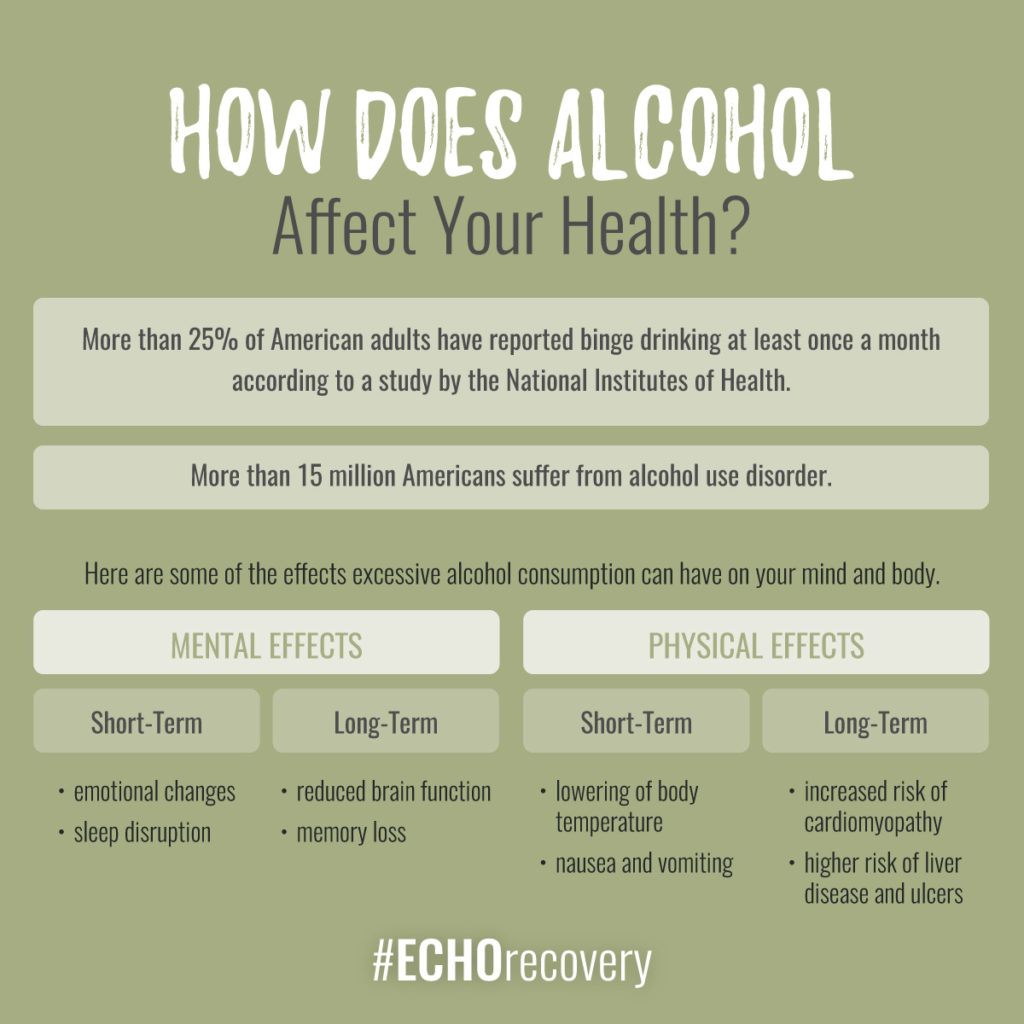
How Does Alcohol Affect Your Health InfographicNIH stopped funding the study, formally known as The Moderate Alcohol and Cardiovascular Health Trial (aka MACH15), because the lead researcher and a few agency employees appeared to be “too cozy with the industry.” And by “industry,” we mean alcohol industry.


Concerns were initially raised back in March when The New York Times investigated the alcohol industry’s influence over this Johns Hopkins-based study.

The Times’ article suggested that some NIH employees actively courted the alcohol industry’s involvement in the study, and that these employees were already insinuating that the results of the trial would endorse moderate drinking as healthy.

The trial’s lead researcher, Dr. Kenneth Mukamal of Beth Israel Deaconess Medical Center in Boston, retorted that the framing of the study had “no input or direction whatsoever from private sponsors, who have had no contact regarding MACH15 with any study staff member since the trial began.”

Other Reasons the Study Lost Its Funding

There were a couple of other reasons cited by NIH in its decision to halt the funding of MACH15:

  • NIH found that employees of its National Institute of Alcohol Abuse and Alcoholism were in such constant communication with Dr. Mukamal that it undermined the scientific integrity of the trial.
  • An NIH investigation also found that its employees and MACH15 researchers appeared to frame the study in a way that its findings would support moderate alcohol consumption, which was what The New York Times’ report suggested, as well.

How Was the Trial Being Funded?

Yes, funding for the trial was coming from the National Institutes of Health, but it’s more complicated than that. More specifically it was coming from a private foundation that raises money for NIH. And, this private foundation was taking donations from Anheuser-Busch InBev, Heineken and other alcohol corporations.

NIH investigated this foundation recently and found no signs of foul play in how it raised money for the MACH15 trial.

What Exactly Were They Studying?

The researchers of MACH15 were testing to see if one alcoholic beverage per day decreases the risk of heart diseases and diabetes. It was supposed to be a 10-year trial, and the study had garnered 105 participants, many of whom were approached in Baltimore by Johns Hopkins researchers.

The trial began in mid-2017, and had eaten up $4 million of its $100 million budget prior to NIH’s decision to call it off. The Baltimore Sun reported that it will still take several months for the researchers to wind down and close out the trial.

NIH has said it will take action against the employees who violated procedures, but the agency did not specify the extent of such discipline.

So What Conclusion Can We Draw?

Although it’s not entirely conclusive that NIH and MACH15 researchers colluded with the alcohol industry in this study – and the results will never come out, anyway – it still calls into question the purity of similar studies – in years past and yet to be conducted.

The Dangers and Risks of Drinking Alcohol

Every year or so, it seems like a new study comes out that has a conclusion such as, “One drink a day is good for you,” or, “One drink per day will shorten your life span.” For example, many U.S. and U.K. news outlets reported on a Finnish study in 2016  and proclaimed that a glass or two of wine with dinner boosts mental and physical health.

However, those publishers overlooked that these results had much to do with lifestyle factors: Wine drinkers tend to make better nutritional choices, and many come from well-off backgrounds, meaning they have access to healthier foods.

What happened with the MACH15 trial does make you wonder if there are outside forces influencing the outcome of alcohol and drug studies.

The Independent reported on a Mediterranean Neurological Institute, Pozzilli review in 2016 and concluded, “A Pint of Beer a Day Could Protect You from Heart Attacks.” However, The Independent and other news outlets overlooked that an Italian beer trade association funded the study.

Latest Parallel to the MACH15 Trial

While we will never know the results of the MACH15 trial, there was a study that wrapped up earlier this year that has several similarities. An international team of researchers analyzed data on nearly 600,000 people in 19 countries, with self-reported data reaching as far back as 1964.

The Lancet medical journal published the study, and new agencies had slightly different takes and degrees of alarm based on the findings. Here are a few of the headlines:

From NBC News: “More than 5 Drinks a Week Could Shorten Lives by Years”
From CNN: “Even One Drink a Day Could Be Shortening Your Life Expectancy”
From CBS News: “For Longevity, Have No More than One Drink a Day”

Our Take

No matter what studies have come out or will come out, we don’t need to wait for them to tell us that alcohol is risky and can harm one’s health if abused. We’ve seen it, and we’ve helped many people find their way in beating this addiction.

And while a drink here or there isn’t the end of the world for most people, we do know that if you go out of your way to get in at least one or two drinks each day, then that can develop into an addiction before long.

So if you’ve found yourself struggling to go a day without drinking or you have a family member who’s battling alcoholism, learn what the full process of recovery requires and how we can help you find appropriate treatment.

Explore the Addiction Continuum of Care

Statistics on Homeless Families, Individuals, and Youth in Maryland

Statistics on Homeless Families, Individuals, and Youth in Maryland

Homelessness in Maryland is has been too high for over a decade, and state, local, public and private interests are looking to reducing homelessness numbers, and make housing available for those in need. The 2016 Annual Report on Homelessness gives the latest statistics on homelessness in the State of Maryland, and points toward a number of opportunities to both remedy and prevent some cases of homelessness in MD.

Homelessness is also a prime factor in substance abuse, with many of those that are addicted to drug s and alcohol at risk for becoming homeless, and those that are homeless are at greater risk of developing substance abuse issues.

ECHO Foundation advocates for more available housing in the State of Maryland; housing for those that are struggling to put a roof over their head, and for those that need housing while undergoing treatment for addiction and substance abuse.

Maryland Homeless Care Statistics

https://health.maryland.gov/

Maryland Homelessness Statistics

Maryland Homelessness Statistics
Maryland’s Interagency Council on Homelessness (ICH) was established in 2014, in response to rising numbers in homelessness. The goal of the council is to examine initiatives statewide, and to recommend policy solutions to fight against homelessness in the state. ICH found the following statistics on homelessness in its recent (2016) report.

How Many Homeless Individuals are in Maryland

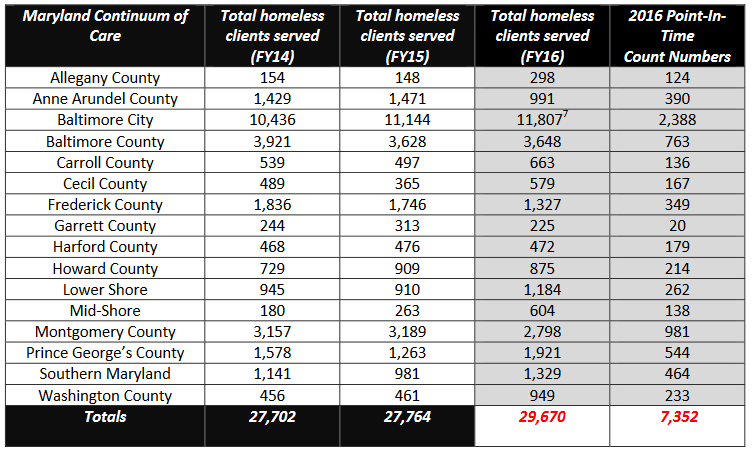
Finding the exact number of homeless in Maryland is difficult, as many who are experiencing homelessness are not counted in censuses. ICH has recently worked with statewide providers to get a better and more accurate count, however. The ICH 2016 Point In Time (PIT) count for homeless individuals totals 7,352 persons experiencing homelessness in Maryland.

Homeless service providers in Maryland offer a different number, however, and this number is called the “Annualized Number” of persons experiencing homelessness in MD. The annualized number represents anyone that received a number of services, including:

  • Emergency Shelter Services
  • Prevention Services
  • Outreach Support
  • Permanent Housing Placement

The annualized number of homeless utilizing the above services in the 2016 fiscal year was 29,670, more than 3 times the number of the PIT count.

Facts and Statistics about Homelessness and the Need for Housing in Maryland

  • The population of homeless in Maryland is (Sheltered = 6,594, Unsheltered = 1,798).
  • The number of unsheltered homeless in Maryland increased 6% from 2015 (27,764) to 2016 (29,670).
  • There are 4,749 shelter beds available for homeless people in Maryland
  • There are 2,953 beds for homeless individuals available in transitional housing units in Maryland.
  • There are 7,689 permanent shelter beds total in the state of Maryland for homeless individuals.
  • There are an estimated 217 homeless encampments in the state of Maryland.
  • Homeless numbers are estimated at 4,389 individuals and 2,556 families.
  • 61% of homeless peoples in Maryland are male.
  • 39% of homeless peoples in Maryland are female.
  • 05% of homeless peoples in Maryland self-identify as transgender.
  • 1,720 children under the age of 18 are homeless in Maryland.
  • 440 youth (between the ages of 18 and 24) are homeless in Maryland.
  • 5,210 adults (over the age of 24) are homeless in Maryland.
  • 58% of homeless individuals in Maryland are African American, while 34% are Caucasian. 8% state that their ethnicity is Latino or “other.”
  • Of the 422,282 military veterans in Maryland, 520 are homeless.
  • On average, 8.75% of veterans in Maryland are homeless.
  • 89% of homeless veterans in Maryland are sheltered, while 16% are unsheltered.
  • 474 individuals were identified as “Unaccompanied Youth” in 2016, between the ages of 18 and 24.
  • Estimates state that 10% of those that are homeless became homeless by fleeing domestic violence.
  • Estimates state that 1,029 homeless individuals have died from 2006 to 2016. With no real way to gauge these numbers, the true amount could be much higher.
  • Deaths in the homeless population have increased 54% from 2007 to 2016.
  • Deaths of homeless individuals in the month of January (when temperatures are at their coldest) have increased 26% since 2007.
  • Western Maryland (Garret, Allegany, Washington, Frederick, and Carroll Counties) had a homeless population of 3,462 in 2016.
  • Central Maryland (Montgomery, Howard, Anne Arundel, Prince George’s Counties and Baltimore) had a homeless population of 22,040 in 2016, the highest density of homeless population in the state.
  • Southern Maryland (Charles, Calvert, and St. Mary’s counties) had a homeless population of 1,329 in 2016.
  • Northern Maryland (Hartford and Cecil Counties) had a homeless population of 1,051 in 2016.
  • The Eastern Shore region of Maryland (Kent, Queen Anne’s, Talbot, Caroline, Dorchester, Wicomico, Somerset, and Worcester counties) had a homeless population of 1,788 in 2016.

Shortfalls in Providing Housing Assistance for Homeless Individuals in Maryland

  • The United States Department of Housing & Urban Development (HUD) estimates that there is a shortfall of about 190,743 affordable rental-housing units in the state. 92,446 for families earning less than 50% of area median income (AMI), and 98,297 for those earning less than 30% of AMI.
  • Average cost of one-bedroom housing in Maryland (fair market value) is $1,141 per month.
  • Maryland has only 34 affordable housing units per 100 households earning 30% AMI or less.

Advocacy for Available Housing in Maryland

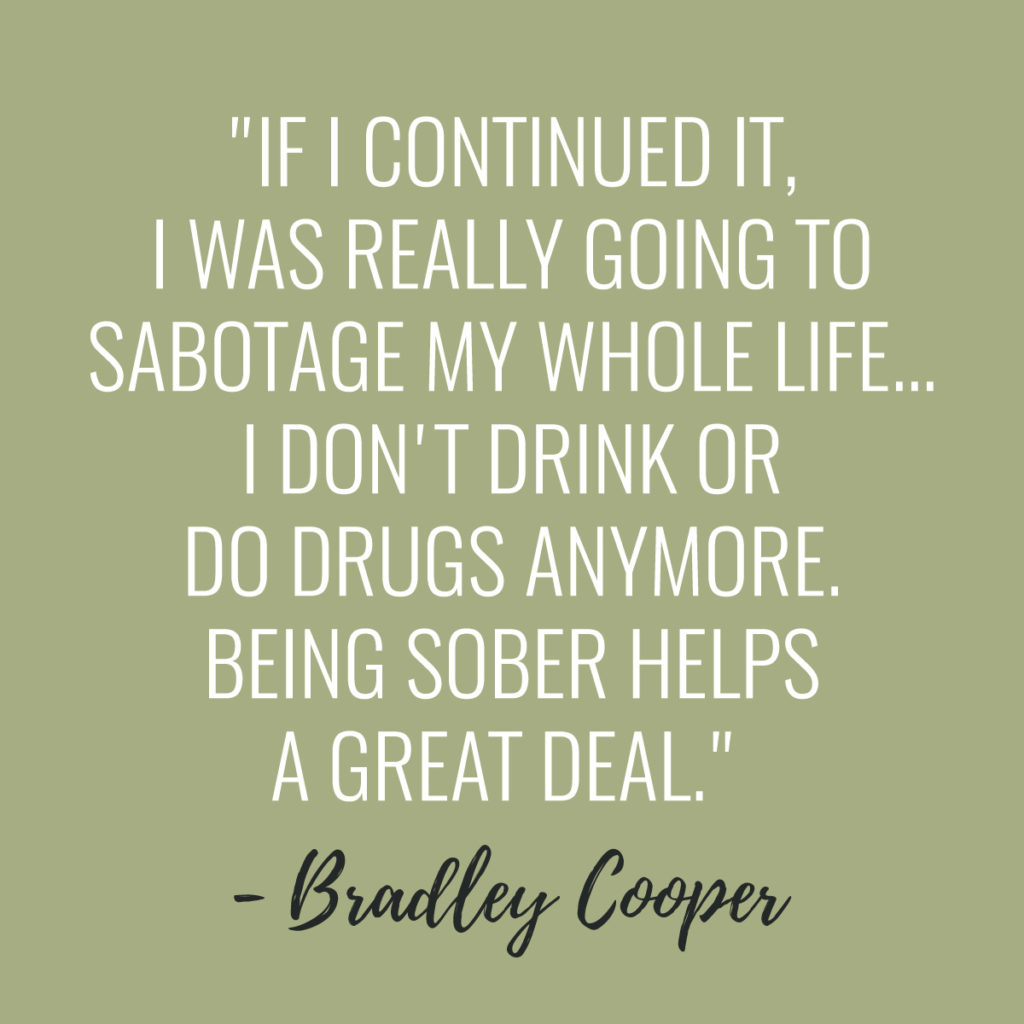
Bradley Cooper Quote About SobrietyIn order to supplement available housing in Maryland for those affected by homelessness and substance abuse, the state needs to begin looking into new options. Maryland’s Interagency Council on Homelessness (ICH) is already beginning to look into options for addressing the housing crisis in Maryland, including looking to mimic what has been done with “Housing First,” a cost effective national best practice for reducing homelessness, in other states. The Housing First program has offered results in many other cities and states, including Salt Lake City and New Orleans.

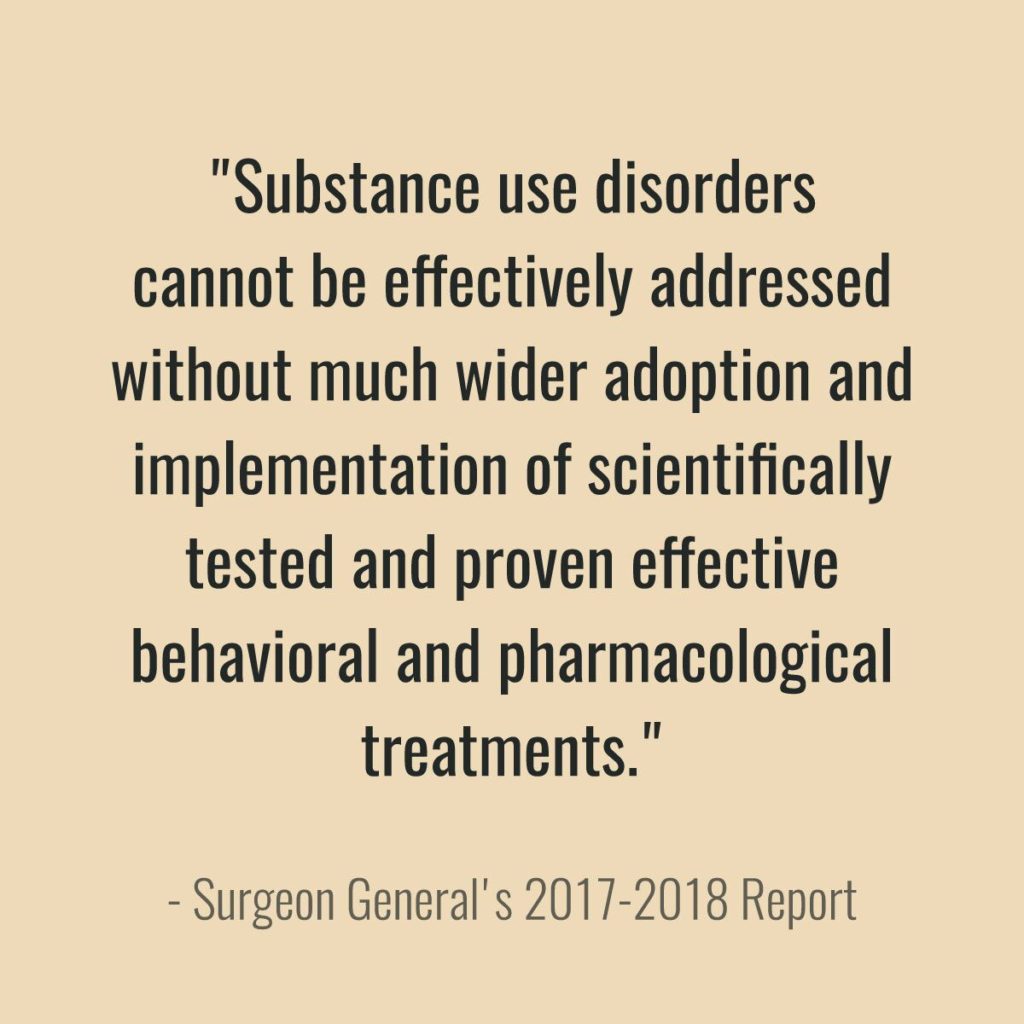
While steps are being taken to ensure that there are adequate housing options available in Maryland for those that are homeless, at risk for homelessness, addicted to drugs and alcohol, or are at risk for addiction, there is still much more that needs to be done.

ECHO Recovery aims to help to provide housing to those that are in recovery from substance abuse and addiction, are at risk for substance abuse and addiction, and those that need transitional housing.

Join The Movement

Addiction Government Report

Opioid Epidemic 2018: Surgeon General’s Report on Alcohol, Drugs, and Health

The United States Department of Health & Human Services recently released a report titled “Facing Addiction in America: The Surgeon General’s Report on Alcohol, Drugs, and Health.” Echo Recovery applauds the Surgeon General’s office for providing this frank, commonsense report on the state of alcohol and drug abuse in the United States. The ongoing opioid crisis in America continues to impact the lives of Americans in every community, in every state, in every part of the country. This report supplies hard data and facts to hopefully drive awareness about issues like alcoholism, drug abuse, and opioid addiction in the country.

The Report And Statistics on the Opioid Crisis

This report is a breath of fresh air in a conversation about addiction that has seen many missteps in recent years. The current administration understands addiction, its effects on American communities, and what proper treatment should entail. As we begin 2018, the Surgeon General’s report is a fantastic resource for starting conversations about how to address the opioid epidemic in 2018 and beyond. The U.S. Department of Health and Human Services states that this report should help individuals, organizations, and their communities recognize the threat of addiction and lessen its impact on their lives. The report is divided into five parts, and each portion addresses different facets of the addiction problem in the United States.

The Neurobiology Of Addiction

One of the major misconceptions surrounding addiction is that drug use is always a choice. This thinking contributes to the social stigma surrounding drug abuse and addiction and is more harmful than helpful. It’s easy to say that people simply shouldn’t use drugs, but this doesn’t account for one of the major contributing factors to the ongoing opioid crisis: prescription medications taken for legitimate medical issues. The Surgeon General’s report states that addiction to drugs or alcohol is a chronic brain disease – not a choice – and it is a disease with potential for recovery or later relapse and recurrence.

Peer-reviewed scientific evidence supports the claim that addiction is a brain disease. Addiction disrupts brain function in three major areas, the basal ganglia, extended amygdala, and the prefrontal cortex. Damage to these areas of the brain due to drug use interferes with the individual’s decision-making processes, responses to environmental stimuli, feelings of pleasure and reward, and stress sensations. It’s important to remember that these issues do not simply go away after stopping drug use. Brain damage of this type can last for several years after achieving sobriety or even be permanent.

This portion of the report indicates that addiction inflicts measurable physical harm to an individual’s brain and should serve as an indication that once addiction sets in, it is certainly no longer a choice for the affected individual. Understanding the neurobiological implications of addiction is an important step in devising new, more effective methods for treating addiction.

Addiction Prevention Programs And Policies

The addiction government report also includes findings on the effectiveness of various addiction prevention programs and public policies. While some policies such as the prescription drug buyback programs and prescription monitoring systems have reported substantial success, other programs and policies haven’t had as much of an impact. As of 2018, there are still very few solid findings concerning inappropriate opioid medication prescribing practices.

Several federal, state, and local-level policies aim to reduce the availability of alcohol in some areas and increase public awareness of the dangers of alcoholism and drunk driving. Many states have cracked down on drunk driving, and increased penalties for violators, to deter other drivers from taking dangerous risks. Since the 1980s, alcohol-related vehicle deaths have dropped almost by half since the implementation of these policies.

Many community programs aim to address their most high-risk areas and community members to build sustainable prevention measures. These programs often serve citizens across all populations and age groups and address their specific problems that could otherwise lead to addiction.

Addiction Recovery Programs and Treatment Paths

Treating the Opioid Epidemic in 2018The Surgeon General’s report also contains inspiring data showing the effectiveness of many recovery options. Supported scientific evidence reports that about 25 million Americans (about 50% of American adults), who once met the criteria for a substance abuse disorder diagnosis, are currently in stable remission for one year or longer. This data shows that the available recovery options in the United States are working, and increasing advocacy, awareness, and the availability of these recovery options should be a top priority in many American communities.

Americans have a wide variety of recovery options at their disposal, from inpatient rehab programs covered by employer-provided insurance to luxury-level recovery resorts. The different recovery options available in the United States have form a robust network of support for people struggling with addiction. People from all walks of life can receive addiction treatment and leave with access to a vast support system.

Healthcare Systems And Addiction

One of the most salient points of the Surgeon General’s report is the fact that divisions between mental healthcare and substance abuse treatment in the past have hindered recovery for many Americans. Widely-supported scientific evidence shows that mental health and addiction are closely related, and many new addiction cases qualify as “dual diagnoses.” A dual diagnosis is a case involving one patient with a mental health issue and a substance abuse disorder occurring simultaneously.

The report indicates that integration of mental health services in substance abuse recovery, and making substance abuse recovery resources more readily available through healthcare providers, are fantastic developments that have had very positive results for many people struggling with mental health issues and substance abuse.

Suggestions For Future Addiction Prevention and Treatment

The Surgeon General’s report ends with several recommendations for fighting addiction in 2018 and beyond. One of the most important points made is that changing the cultural perception of addiction is absolutely crucial to improving recovery rates and slowing the rate of new addiction cases. By making addiction more of a socially acceptable topic, people who need substance abuse treatment will be more receptive to entering rehab or exploring their recovery options.

The report also suggests that community stakeholders need to address addiction in their communities however possible, from investing in new community programs and advocacy initiatives to donating to substance abuse treatment facilities. Ultimately, starting more conversations about drug abuse and addiction will help reshape public perceptions about these issues and hopefully encourage the people who need help to seek it.

A Hopeful Sign For The Future

This report is a good indication that the current administration is committed to fighting the opioid crisis and addiction rates in the United States. The policies and suggestions for 2018 addiction treatment practices contained in the report show that this administration truly understands addiction and its effects on Americans. American citizens should feel hopeful that the next three years of the current administration will contain more progress toward stopping the opioid crisis and making substance abuse recovery a more accessible option for the people who need it.

Join The ECHO Recovery Movement By Donating

Meet ECHO Recovery

Meet ECHO Recovery: Supporting Addiction Recovery in New England

ECHO Recovery has been launched to help offset the limited housing designed to serve individuals in the midst of addiction recovery. Here at ECHO Recovery, we are eager to start our mission to right this wrong. Our goal is to share information with the community, equipping recovering addicts and their loved ones with the tools necessary to get back to a sober lifestyle.

Knowing that the East Coast is one of the hotbeds of the nation’s alarming opioid epidemic, our goal is to create a safe and welcoming environment that is easily accessible not only to Maryland residents, but also to those across the entire New England region.

Jim Haggerty, one of our founders, has years of experience as a facilities administrator and as a recovery professional. His vision is to ease the burden placed on addicts and their families during treatment by finding a safe and reliable place for them to stay during recovery.

Opioid Deaths Reflect Need for Solutions

ECHO Recovery

While many types of drug addiction threaten Americans in 2017, opioids are by far the most deadly and dangerous. The threat posed by opioids doesn’t only stem from the black market.

Prescriptions for powerful painkillers in the past few decades have created an entire generation that seems to be hooked on opioids. It’s no surprise that the use of illegal opioids, like heroin and fentanyl, has worsened as opioid painkillers have become more widely prescribed.

Taking a look at the hard numbers reveals just how bad the problem is. According to the Centers for Disease Control:

  • 91 Americans are killed daily by prescription opioids and heroin (out of 142 overall drug overdose deaths each day).
  • The number of opioid-related deaths in the U.S. has quadrupled since 1999.
  • Heroin use between 18 to 25 year olds saw a large increase between 2002 and 2013.
  • Overdose deaths related to synthetic opioids rose significantly from 2014 to 2015.

The ECHO Recovery Solution

The concerning increase in opioid use and overdoses in the past two decades is a large part of what motivated a concerned group of professionals to found ECHO Recovery in the first place. Our goal is to not only help people in Maryland, but to provide resources to all of New England. After all, the region has been hit harder than most by the rash of opioid overdoses.

Americans struggling with opioid addiction on the East Coast face a major shortage of resources for treatment. ECHO Recovery represents an opportunity for anyone dealing with heroin or painkiller addiction to get help and start fresh.

Don’t feel like you need to deal with this struggle alone. You can find support among peers and recovery experts in a safe, established treatment community. If you feel that you may need assistance finding housing for addiction treatment or have any questions about recovery, please  contact us online.

Explore Our Sober Housing Services